Category: Marketing

  • The Quiet Craft Behind Links That Actually Stick

    The Quiet Craft Behind Links That Actually Stick

    There’s a strange irony in modern SEO. Everyone wants links, yet almost no one wants to talk honestly about how they’re built — especially in niches that live outside polite conversation. Adult sites, dating platforms, and edgy publishers don’t get the luxury of playing by the same rules as a SaaS blog or a food recipe site. And that’s exactly why link building in this space has become more of a craft than a checklist.

    If you’ve spent any time working in SEO, you’ve probably noticed that generic tactics break faster in adult niches. Outreach emails get ignored. “High DA” promises fall flat. Networks burn out overnight. What works today might quietly die tomorrow, and nobody sends a memo. That’s where experience starts to matter more than theory.

    This isn’t a how-to guide filled with bullet points and templates. It’s more of a reflection on what actually holds up when things get complicated.


    Why adult niches play by different rules

    Adult websites exist in a strange middle ground online. They’re legal, profitable, and massive in traffic potential — yet they’re treated like second-class citizens by advertisers, platforms, and even hosting providers. That tension spills directly into link building.

    Many mainstream publishers won’t link out, no matter how clean your content is. Some will say yes, then quietly remove the link later. Others will ask for pricing that makes no sense unless you’ve already been around the block.

    Because of this, link building here isn’t about volume. It’s about durability. One solid placement that stays live for years can outweigh twenty flashy links that vanish after a Google update.

    That’s also why relationships matter more than spreadsheets in this niche.


    The human side of “risky” links

    Here’s something people rarely admit: most adult link deals don’t start with metrics. They start with trust.

    Editors in adult-friendly spaces are constantly approached by spammy SEOs, fake brands, and disposable sites. They’ve learned to spot shortcuts from a mile away. When someone approaches them with patience, transparency, and realistic expectations, it stands out.

    This is where Don Mazonas adult link building often gets mentioned in quiet conversations. Not because of loud claims or public case studies, but because the approach leans heavily on long-term relationships rather than churn-and-burn tactics. It’s less about “how many links this month” and more about “which links will still exist next year.”

    That mindset is surprisingly rare.


    Content still matters (even when people say it doesn’t)

    There’s a persistent myth that content quality doesn’t matter in adult SEO. Anyone who’s tested this deeply knows that’s only half true.

    Yes, some low-quality pages rank. But they rarely stay ranked.

    Editors are more likely to place links in content that doesn’t embarrass them. Readers are more likely to click links that feel relevant rather than forced. Google, meanwhile, has become extremely good at understanding when content exists only to host a link.

    The best adult link placements often live inside articles that could pass as mainstream if you removed a few contextual references. They’re informative, conversational, sometimes even thoughtful. That gives them a longer shelf life, which is the real currency here.


    Avoiding footprints without overthinking it

    A lot of SEOs swing too far in one direction. Either they obsess over footprints until nothing gets done, or they ignore patterns completely and hope for the best.

    The truth sits somewhere in the middle.

    Using the same anchors, the same types of sites, and the same content angles is risky in any niche, but especially in adult. At the same time, over-engineering diversity can make your link profile look unnatural in a different way.

    The safer approach tends to be organic inconsistency. Different writers. Slightly different tones. Links placed in different parts of an article. Some branded, some generic, some contextual but subtle. Not because a tool says so, but because that’s how real publishing looks when you zoom out.


    What usually goes wrong

    Most failed adult link campaigns collapse for predictable reasons:

    • Relying too heavily on private networks
    • Prioritizing DA over relevance
    • Treating publishers as disposable
    • Scaling too fast before links age

    There’s also the issue of impatience. Adult SEO can move fast in rankings, but slow in trust. Burning bridges early might give a short-term boost, but it often costs you access to the few publishers that actually matter.


    Measuring success beyond rankings

    Rankings are important, obviously. But they’re not the whole story.

    A strong adult link profile often shows up first in crawl frequency, indexation stability, and traffic quality. Pages stop dropping in and out of the index. Updates hurt less. Recoveries happen faster.

    These signals don’t show up neatly in dashboards, which is why they’re easy to ignore. But experienced SEOs pay attention to them because they usually predict future performance better than any single keyword position.


    The long game no one wants to play

    Here’s the uncomfortable truth: the adult sites that last are rarely built on shortcuts. They’re built on boring consistency, careful placements, and a refusal to chase every new tactic.

    That doesn’t mean playing it safe all the time. It means knowing when to take risks and where to anchor stability.

    Link building in this space is less like a growth hack and more like compound interest. Slow at first. Unimpressive to outsiders. Then suddenly very hard to compete with.


    A quieter conclusion

    Adult link building doesn’t need more noise. It needs more patience.

    The people who do well here tend to move quietly, test obsessively, and talk less about what they’re doing. They understand that every link is a small vote of trust — from Google, from publishers, and from users.

    When those votes are earned rather than manufactured, they last. And in a niche where things disappear quickly, longevity is the real advantage.

  • Scaling Style on the Move: How Multi-State Wrap Projects Are Redefining Mobile Branding

    Scaling Style on the Move: How Multi-State Wrap Projects Are Redefining Mobile Branding

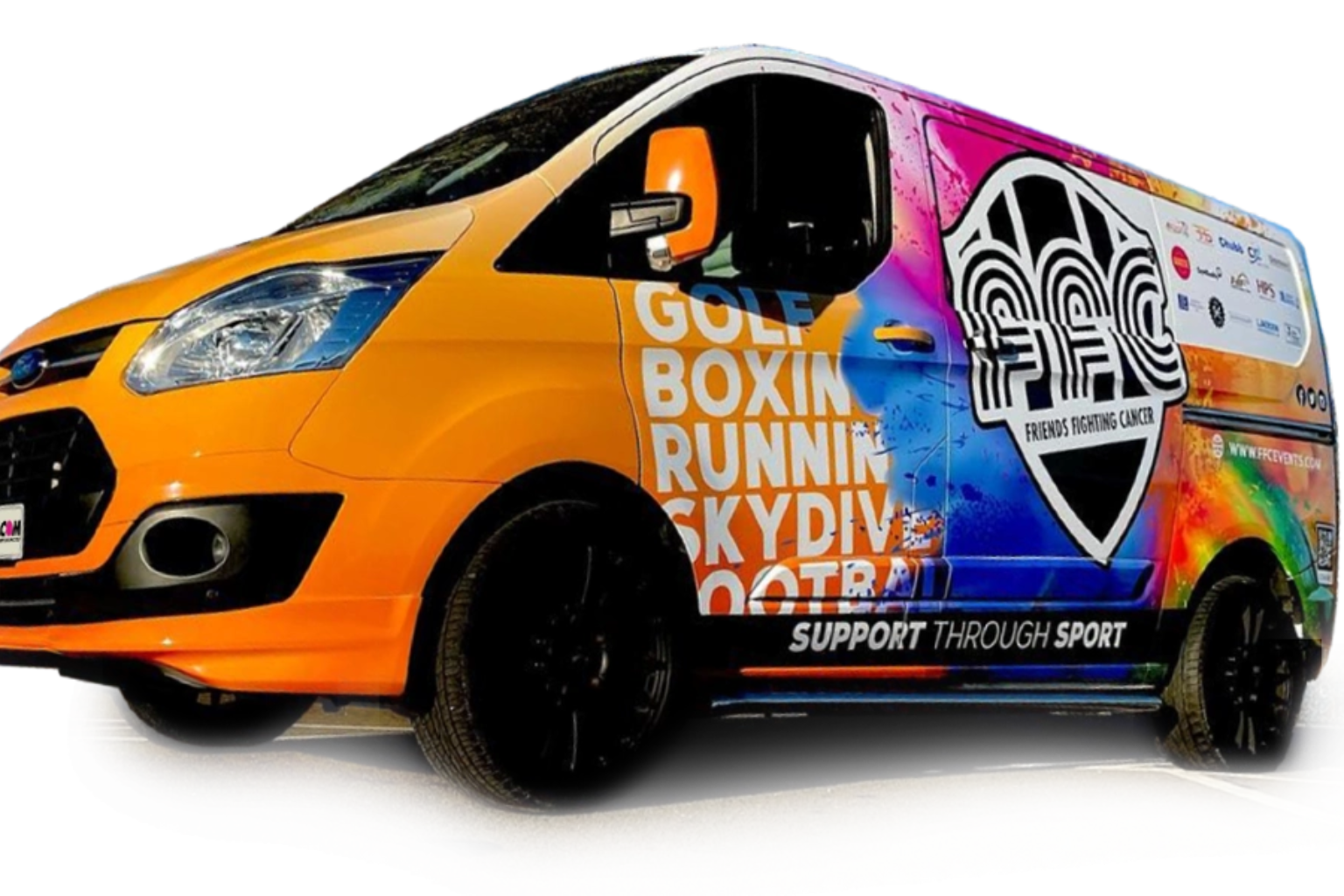
    Somewhere in a crowded city street or a quiet highway in the middle of nowhere, there’s a truck or van wrapped in sharp, striking vinyl, grabbing attention without trying too hard. Maybe it’s a bold orange with clean typography. Maybe it’s a satin-black gradient that whispers luxury. Either way, it’s part of something bigger—a brand that’s going places. Literally.

    These days, vehicle wraps are more than just decals or flashy graphics. They’ve become serious branding tools, especially for growing companies with crews, branches, or clients spread across the map. And with business becoming more remote, mobile, and multi-state than ever, executing clean, consistent, and coordinated wraps has turned into both a creative and logistical art.


    Going Beyond the Zip Code: The Rise of Multi-State Wrap Projects

    If you’re a business with vehicles operating across state lines, you’ve likely run into this: getting your trucks or vans wrapped consistently in five different places is… a headache. Different vendors, varying quality, missed deadlines, mismatched colors. It’s a branding nightmare.

    That’s why multi‑state wrap projects have become such a big deal. They’re not just about getting vinyl on vehicles—they’re about making your brand recognizable and consistent whether your van is in Tampa or Tacoma. These projects pull together multiple teams, printers, installers, and shipping logistics under one central umbrella, ensuring that what you envisioned is what shows up on every vehicle across every location.

    And here’s the kicker: you don’t need to be a massive franchise to benefit. These services are scaling down, becoming accessible to small-to-mid-sized businesses looking to expand their visual footprint without compromising quality.


    The Beauty (and Challenge) of Wrap Project Coordination

    Now, let’s be real—pulling off a wrap job in one city is one thing. Doing it across five, ten, or even twenty locations? That’s a different beast entirely. You’ve got production timelines, material shipping, installer scheduling, client availability, weather (yep, that matters), and vehicle access windows. Miss one detail, and things start falling apart.

    That’s where solid wrap project coordination saves the day. Think of it like event planning, but for your brand’s rolling ambassadors. You’ve got one central point of contact managing the whole thing—tracking files, scheduling installs, confirming material deliveries, and ensuring every job is photo-verified and signed off before wheels hit the road.

    When this coordination is done right, the experience feels seamless to you, even if it took a dozen moving parts behind the curtain. That’s the goal: flawless branding with minimal friction.


    Certified Installers Anywhere (Yes, Really)

    One of the most common fears in multi-location wraps is trusting the quality of local installers. Will they care? Will they follow the file specs? Will they cut corners? Valid questions. But the industry’s changing—and getting smarter.

    Today’s top wrap providers work with networks of certified installers anywhere in the country. These aren’t random contractors pulled from Craigslist. They’re vetted pros who’ve passed technical exams, met industry standards, and know how to handle complex designs and tricky curves.

    So whether your new fleet vehicle gets delivered to Chicago, Albuquerque, or a tiny town in Oregon, you can expect the same sharp lines, bubble-free application, and photo documentation of the work. No compromises. No guessing games. Just results.


    Why This All Matters (More Than You Might Think)

    Let’s zoom out for a second. Why does it matter if your wrap looks slightly different in Dallas than it does in Denver? Because perception is everything. Customers notice when a brand looks buttoned-up. Clean vehicles, sharp graphics, color consistency—it all sends a message: “We’re professional. We’re trustworthy. We’ve got our act together.”

    Inconsistent branding does the opposite. It confuses people. It creates doubt. It weakens the very thing you’ve worked so hard to build.

    In an era where competition is fierce and visibility is currency, vehicle wraps are one of the few advertising tools that meet people where they are. On the street. At the job site. In parking lots and neighborhoods. And when every vehicle, in every city, looks like it belongs to the same high-performing team, that message sticks.


    Wrapping Smarter: The Hidden ROI

    Here’s something most folks don’t realize: wraps aren’t just visual—they’re financial. They protect your paint. They increase resale value. They’re more affordable (and visible) than many digital ad campaigns. And if you’re wrapping several vehicles across states, you’re essentially building a rolling billboard network at a fraction of what it would cost to advertise on actual billboards.

    Plus, the numbers don’t lie. Studies show that branded vehicle wraps generate thousands of impressions per day. Multiply that by 10 vehicles. Across 5 states. For 3 years. That’s exposure you can’t ignore.


    Final Thoughts: Wrapping Without Borders

    As businesses grow beyond city limits, their branding has to grow too. It’s no longer enough to have a good-looking website or polished social media. Your brand needs to show up in real life, consistently, confidently, and across every market you serve.

    Whether you’re handling your first multi‑state wrap project, diving into full-on wrap project coordination, or searching for certified installers anywhere in the country, the right wrap partner can make the difference between chaos and cohesion.

    So, if your brand’s ready to hit the road—and keep going—make sure your wraps are ready to go the distance, too.

  • The Rolling Billboard: How Vinyl Wraps Are Changing the Face of Transport Graphics

    The Rolling Billboard: How Vinyl Wraps Are Changing the Face of Transport Graphics

    There’s something oddly magnetic about a well-wrapped vehicle on the road. Maybe it’s the vibrant logo you can spot from two blocks away. Maybe it’s the clean lines hugging every curve of the trailer. Or maybe, just maybe, it’s the way brands have learned to tell stories that roll—literally. In a world where attention is the currency, your moving vehicle might just be your best-performing ad space.

    Let’s settle in and chat about what makes these wraps such a game-changer, particularly when it comes to transport graphics, and why this trend shows no signs of slowing.


    The Roadside Billboard That Actually Moves

    Back in the day, advertising was a little more static. Billboards, radio, maybe a flashy newspaper ad. But we live in motion now—commuting, delivering, shuttling, road-tripping. And where the people go, the marketing follows. That’s where transport graphics enter the picture.

    A delivery van wrapped in bright visuals becomes a brand ambassador on wheels. A trailer parked near a construction site? That’s now a 53-foot canvas of persuasion. Businesses—big and small—are realizing this is more than decoration. It’s strategy.

    And when done right, a wrapped vehicle doesn’t just say “we exist”—it says “we care how we look doing it.”


    Why Vinyl? Because It’s the New Paint, But Better

    Here’s the thing: painting a vehicle takes time, commitment, and buckets of cash. Once it’s done, it’s done. But with wraps? You’ve got flexibility. Style. Protection. And maybe most importantly—freedom to change it up without needing a full respray.

    The material used? Durable, stretchable, and made to take on the elements. Rain, snow, blazing sun—it holds up. That’s part of why so many businesses are flocking to vinyl wrap as their go-to solution for branding vehicles, whether it’s a single van or an entire fleet.

    Wraps also protect the original paint. That means when it’s time to sell or upgrade, you peel it off and the finish underneath is as fresh as the day it rolled off the lot. Pretty neat trade-off, right?


    Minneapolis: A Quiet Hub for Loud Wraps

    If you’re hunting for places where this art form really shines, don’t overlook the Midwest. In particular, the Twin Cities have been buzzing with wrap culture.

    Vinyl wrap Minneapolis businesses have carved out a niche in combining small-town service with big-city creativity. You’ll find shops that go beyond cookie-cutter designs. They care about color science, alignment, durability, and storytelling. Whether it’s a startup needing a splashy van for deliveries or a food truck owner wanting to stand out at the State Fair, the wraps coming out of Minneapolis aren’t just functional—they’re downright fun.

    And that’s the magic, really. A great wrap doesn’t just say “look at me.” It makes you want to.


    Designing with Intention: The Art Behind the Wrap

    Now here’s a part most folks overlook. It’s not just about slapping on logos and hoping for the best. A good wrap starts with a good story. Who are you trying to reach? What do you want them to feel?

    Designers work within tight constraints. The windows. The handles. The curves of the body. It all affects layout. Your message needs to be readable on the move, even from 20 feet away. Color matters. Font choice matters. And balance? That’s everything.

    It’s an art form wrapped in logistics. And when it clicks—oh, it clicks.


    The Application: More Craft Than You’d Think

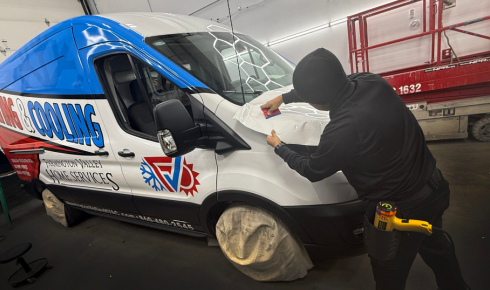
    Applying vinyl isn’t for the faint of heart. There’s a dance to it. A rhythm. You’ve got to clean the surface obsessively. Measure multiple times. Use heat precisely. Smooth out air bubbles before they turn into eye-sores.

    One mistake and you’re back to square one.

    But in skilled hands, it’s a transformation worth watching. An old box truck becomes a sleek billboard. A plain utility van becomes part of the brand.

    No two wraps are exactly alike, which keeps things exciting.


    Branding on the Move: Value That Outpaces Its Cost

    Let’s talk ROI, because at the end of the day, this isn’t just an art project—it’s business.

    A wrapped vehicle can generate tens of thousands of impressions daily. That’s not a typo. Think about how many cars pass you on your morning commute. Think about how many stoplights you sit at. Every moment your vehicle’s on the road, it’s advertising.

    Compared to digital ads or one-time print campaigns, vinyl wrapping delivers consistent, long-term exposure. And once it’s done, there’s no recurring cost. That’s smart marketing—especially for local service providers who thrive on visibility.


    Time-Tested and Road-Proven

    One of the common concerns folks have is durability. Will it hold up over the years? Will sun fade the colors? Will snow and salt eat away the edges?

    Here’s the truth: the materials used today are built to last. If properly cared for, a wrap can look fresh for 5–7 years, easy. Longer in many cases. Plus, maintenance is simple. A gentle wash and an occasional check for lift points keep it looking brand new.

    And when it’s time to swap things out—seasonal campaigns, rebranding, or even just a refresh—it peels cleanly without damage.

    That’s the kind of lifecycle flexibility traditional paint jobs can’t even dream of.


    From Bold to Subtle: There’s a Style for Everyone

    Not every wrap screams neon. Some businesses prefer understated branding. Think matte black with sleek logos. Or minimalist designs with soft gradients. Whether you’re going for flashy or refined, the possibilities with vinyl are virtually endless.

    And for the daring? Chrome finishes, textured materials, even glow-in-the-dark options exist. Wraps allow businesses to push boundaries—without breaking the bank.


    Final Thoughts: It’s More Than Just Looks

    Sure, wraps are eye-catching. But they’re more than that. They represent professionalism. They show customers you’re serious about how your brand shows up in the world.

    And with the rising demand for mobile businesses, delivery fleets, and contractors of all stripes, branding on the road is no longer optional—it’s essential.